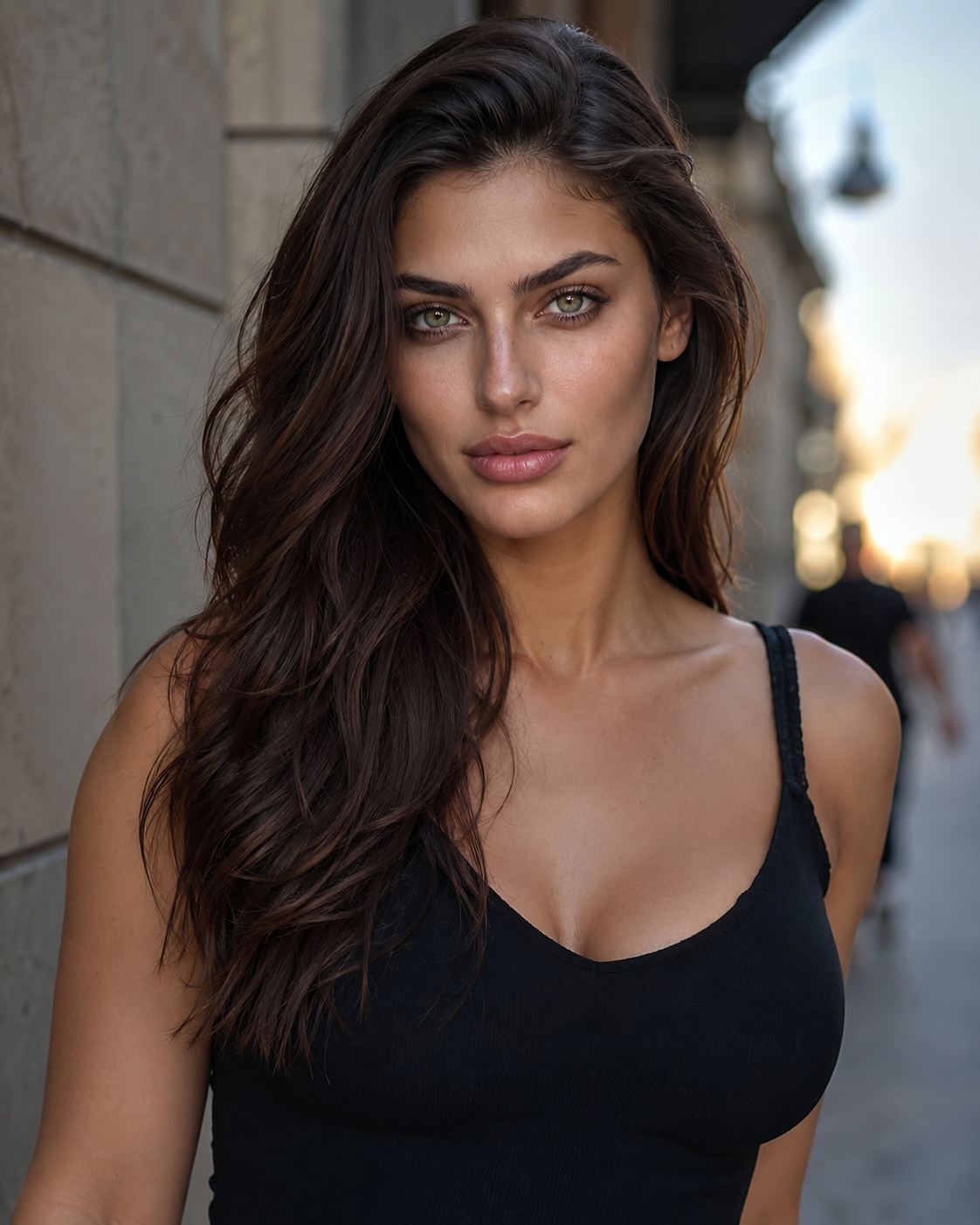
A stunning 25-year-old Greek woman, 168 cm tall, feminine hourglass figure, warm olive skin, long black wavy hair, deep brown eyes, sculpted cheekbones, elegant nose, naturally full lips, classic Mediterranean beauty, luxury fashion portrait, golden sunlight, ultra realistic, 8K.
A gorgeous 24-year-old Croatian woman, 171 cm tall, slim athletic body, fair skin with a warm undertone, medium brown hair, blue-green eyes, refined facial features, elegant smile, Mediterranean-Adriatic beauty, realistic portrait, golden hour lighting, 8K.
- Edit videos through natural conversation
- Grounded in real-world knowledge — physics, history, science
- Reference images, text, video, or audio to build one cohesive scene
Create anything from anything.
Try it now 👇
openart.ai/suite/create-video/gemini-omni-flash
When Gerard Butler was cast as the Phantom in The Phantom of the Opera (2004), he wasn’t an experienced singer. With only a few months of vocal coaching and no formal singing background, he took on one of the most demanding roles in musical cinema.
Rather than chasing flawless technique, Butler delivered a performance driven by emotion and vulnerability. His raw vocals gave the Phantom a darker, more human edge, proving that sometimes authenticity can be just as powerful as years of professional training.
Asian people don’t have “small eyes.” It’s an illusion created by a slight, average difference in palpebral fissure height, which is usually somewhat smaller in Asian populations in most anthropometric research.
So, the question becomes: Why did this trait evolve? A common answer is “to keep their eyes warm,” but this doesn’t make much sense, as we also see this trait in some African populations (e.g., the Khoisan).
A better hypothesis is that this was an adaptation to reduce glare, as this would apply to most of the environments where this trait is common. For instance, it’s plausible this trait evolved in northeast Asia, where snowy and open environments with glare were common, and then it spread throughout the continent from there.
But it’s an open question: What do you think of this hypothesis?
The funniest thing about ad-libs in music is that most people don’t even notice them until someone points them out. 😭🎤 Suddenly you realize that the same short sounds—like a laugh, a tag, or a signature phrase—have been appearing across songs for years without you ever consciously registering them.
What starts as a small background detail actually becomes part of an artist’s identity. These ad-libs aren’t random anymore—they act like audio signatures, instantly signaling who’s on a track even before the first verse begins. From hype shouts to subtle vocal tags, they quietly shape how we recognize and remember music.
Once you notice them, you can’t unhear them. And suddenly every song feels a little more familiar than it did before. 🔥🎶
Released in 2014, My Love by Route 94 featuring Jess Glynne became one of the defining house records of the decade. Built around a deep bassline, understated production, and Jess Glynne’s unforgettable vocals, the track reached No. 1 on the UK Singles Chart and helped bring deep house into the mainstream.
More than a decade later, My Love still sounds as fresh as ever. Whether it’s played at festivals, clubs, or sunset sets, it instantly brings back memories of the mid-2010s, when UK house music was dominating dance floors around the world.
War is often remembered through battles, maps, and military victories—but its greatest impact is measured in human lives. 🌍💔 Beyond the front lines, conflict destroys homes, separates families, disrupts healthcare and education, and forces millions of people to flee. Even after the fighting ends, the consequences can linger for generations through trauma, economic hardship, damaged infrastructure, and communities struggling to rebuild.
History repeatedly shows that no nation emerges from war untouched. Lives are lost, resources are consumed, and years of progress can disappear in a matter of months. While wars may reshape borders or governments, they almost always leave ordinary people carrying the heaviest burden.
Perhaps the greatest lesson history teaches is that lasting progress is built through peace, cooperation, and stability—not destruction. Every conflict is a reminder of how much humanity stands to lose when diplomacy fails. 🕊️